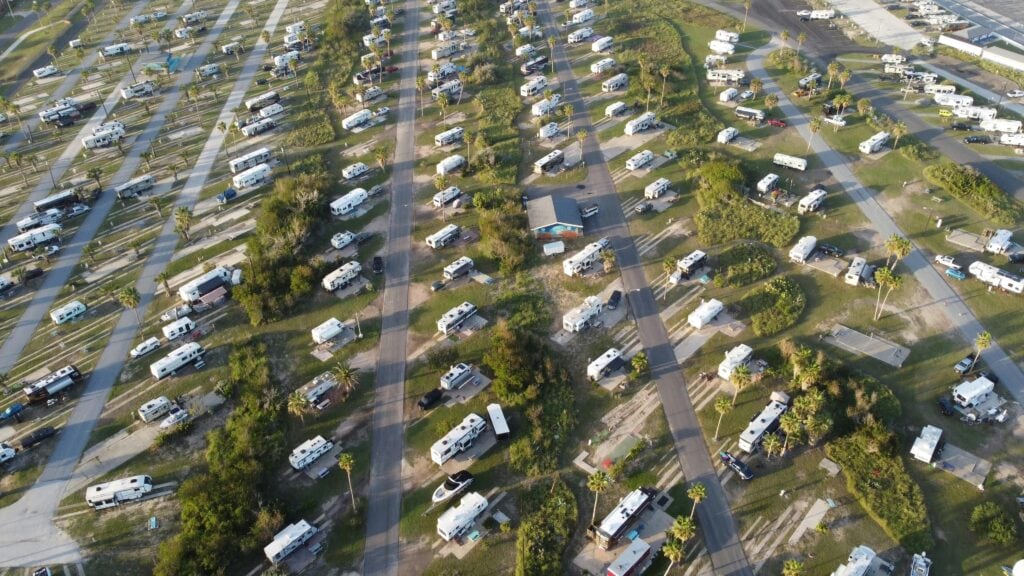
Choosing your first RV park can feel simple at first, until you realize how many small details affect the actual stay. A park may look great in photos, but the right fit depends not just on aesthetics, but on practical things as well. Here’s your beginner’s checklist to help you pick the perfect RV park!
Why Your First RV Park Matters
Your first RV park sets the tone for how you feel about the whole hobby. A smooth, well-matched first stay builds confidence fast, while a mismatched one, such as a tight site for a long rig or a noisy lot when you wanted quiet, can make you second-guess a trip you were otherwise excited about. The good news is that almost every common first-timer mistake is avoidable with a few minutes of research before you book.
This matters more for a first trip than almost any other, because you do not yet have a feel for what “good enough” looks like in person. Experienced RVers can often tell from a single photo whether a site will work for their rig. As a beginner, you are working from a checklist instead of instinct, which is exactly why having one matters.
The Five Must-Haves on Every Checklist
Before you compare amenities or photos, confirm five things: site length for your actual rig, the hookup type you need, the cancellation policy, the total cost including fees, and recent guest reviews. These five cover the situations most likely to derail a first trip, and they take only a few minutes to verify on a park’s website or with a quick call.
A simple way to use this list is as a filter rather than a wish list. Rank your own priorities first, whether that is budget, location, quiet, or full hookups, and let your top one or two priorities eliminate parks rather than trying to satisfy every category equally. A beginner who decides “full hookups and a quiet site matter most to me” will have a much easier time choosing than one trying to optimize for everything at once.
Hookups Explained: Water, Sewer, and Electric
A full-hookup site typically includes water, sewer, and electric connected directly at your site, which means no trips to a dump station and continuous access to power and water. A partial-hookup site usually includes electric and water but not sewer, so you will need to use a shared dump station before you leave or partway through a longer stay. Dry camping, sometimes called boondocking, means no hookups at all, relying instead on your RV’s onboard water and battery systems.
For a first trip, full hookups are worth the extra cost if your budget allows it, simply because they remove one more thing to manage while you are still learning your rig. Partial hookups are a reasonable middle ground if you are comfortable making an occasional dump station run. Dry camping is often best left until you understand your rig’s water and power limits, since running out of either with no hookup nearby is a stressful way to learn that lesson.
Amenities Worth Paying For
Not every amenity is worth chasing, but a few make a real difference for beginners specifically. Laundry facilities matter if you are traveling for more than a few days, and available Wi-Fi or strong cell service matters if you need internet access for work, navigation, or staying in touch. A well-lit, paved interior road can also matter more than people expect when they are still learning to maneuver a rig at night.
Pull-through sites are also worth paying a premium for on a first trip, since backing into a tight back-in site is a skill best practiced after a few easier stays.
Pools, playgrounds, and organized activities are nice but rarely decisive for a first-timer. They matter more if you are traveling with kids who need something to do, but they should not outweigh the basics on your checklist. A park with excellent hookups and a so-so pool will almost always serve a beginner better than the reverse.
Red Flags to Watch For
A few signals are worth pausing on before you book. Reviews that consistently mention unresponsive staff, unclear fees revealed only at check-in, or sites that do not match their advertised length are worth taking seriously, especially if the same complaint shows up across multiple reviews rather than just once. A single bad review can be an outlier, but a pattern is information.
It is also worth noticing what a park’s listing does not say. A photo gallery with no recent photos, a website with outdated information, or a park that cannot answer basic questions about hookups or site length when you call are all signs to dig a little deeper before committing. None of these alone means a park is bad, but together they are worth a second look.
How Do You Research a Park Before You Book?
Start with recent reviews, ideally from the last twelve months, since staff, maintenance, and even site conditions can change year to year at any park. Cross-reference reviews with the park’s own website and social media, looking specifically to see whether recent photos and current site descriptions match what guests describe. A quick call to ask your specific questions, rather than relying only on the listing, is often the fastest way to confirm a park is a good fit.
It also helps to read reviews with your own priorities in mind rather than treating every complaint equally. A reviewer upset about weak Wi-Fi may not matter to you if you are disconnecting on purpose, while a reviewer describing a hookup issue similar to something you are worried about is worth far more attention. Reading reviews this way turns a long list of opinions into useful, specific information.
Your First RV Park Checklist
Save this before you book your first stay:
- Site length matches your actual rig, including any tow vehicle.
- Hookup type, whether full, partial, or dry, matches your comfort level.
- Total cost is confirmed, including any extra fees.
- Cancellation policy is reviewed before paying a deposit.
- Recent reviews from the last 12 months are checked for patterns.
- Photos and site descriptions match what reviewers describe.
- Internet access, laundry, road lighting, and road surface are considered if they matter for your trip.
- A phone call is placed if anything is unclear.
Book with Town & Country RV Park Today!
Town & Country RV Park sits in Bridge City, Texas — less than 3 miles from the Orange County Advanced Power Station and within a 20-minute drive of every major refinery and LNG facility in the Golden Triangle. Our sites come with all utilities included and free WiFi, so you can park, plug in, and get to work. Book with us today!
FAQ
What’s the difference between an RV park and an RV resort?
There is no strict industry definition, but “RV resort” generally signals more amenities, such as pools, organized activities, or higher-end common areas, while “RV park” is the more general term covering everything from basic to upscale. The terms are used inconsistently enough that it is worth checking the actual amenity list rather than relying on the name alone.
How much should I expect to pay per night?
Rates vary widely by location, season, hookup type, and amenity level. In general, private full-hookup RV sites typically cost $40 to $100 per night, while basic public campgrounds may be less, and premium resort-style parks can exceed $100 per night. Booking off-season or farther from major destinations generally lowers costs.
How far in advance should I book?
For popular destinations or peak season, two to three months ahead is a safe guideline, while off-season or less-in-demand parks often have availability with just a week or two’s notice. If you are flexible on dates, you will generally have an easier time finding availability than if you are locked into a specific weekend.
Are reviews trustworthy?
Individual reviews can be biased in either direction, but patterns across many reviews are generally reliable. Focus on what comes up repeatedly, especially around hookups, site conditions, and staff responsiveness, rather than weighting any single review too heavily.