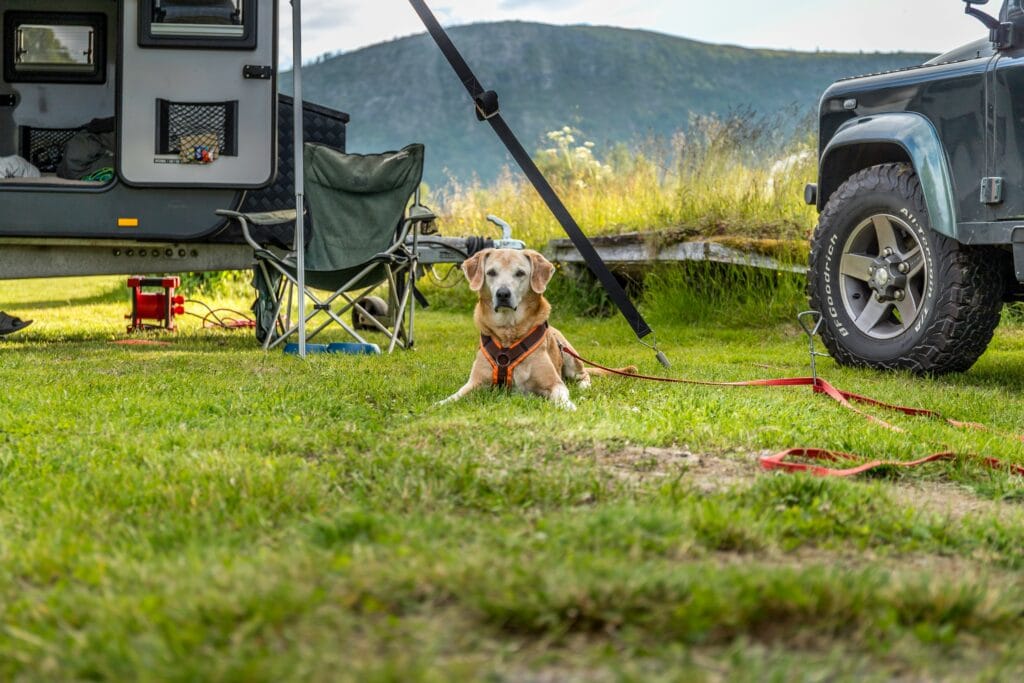
Bringing your dog on an RV trip can be one of the best decisions you make for both of you. It does take more planning than loading up and heading out, though. Pet policies vary from park to park, and the logistics of keeping a dog safe on the road are different from what you manage at home. Here is a complete pre-trip plan to help you get ready.
Before You Go: Vet Check and ID Basics
Schedule a vet visit before any extended trip, especially if your dog has not had a checkup recently. Make sure vaccines are current. Many RV parks require proof of rabies vaccination, and some may also ask for documentation of other core vaccines. If your dog takes regular medication, bring more than you think you will need. Running low on prescription medication in an unfamiliar area is a common and avoidable problem.
Make sure your dog’s ID tags are current and include your phone number. If your dog is microchipped, confirm that the registration is up to date with your current contact information. Both matter most if your dog gets loose in an unfamiliar place. That is exactly when a collar tag or microchip can make the difference.
Park Policies: What to Expect
Most private RV parks welcome dogs, but pet policies vary widely. Many parks charge a pet fee. Some charge a few dollars per night, while others charge a flat fee per stay. The exact amount depends on the park. Some parks cap the number of pets per site. Others have weight limits or breed-specific restrictions.
Breed restrictions are common enough that owners should call ahead before booking. These restrictions are often tied to the park’s insurance policy. That said, call before you book. That quick call can save you from arriving only to be turned away.
Always confirm the leash policy, too. Nearly all parks require dogs to be on leash in common areas. Some parks have designated off-leash areas or dog parks on the property. That is worth knowing in advance if your dog needs room to run.
Packing for Your Dog
The basics are straightforward: food, water, bowls, a leash, a collar with current ID tags, waste bags, and any medications your dog takes. Bring enough food and medication for the full trip, plus extra in case your plans change.
A few items are easy for first-time dog travelers to forget. Pack a longer tie-out cord or stake for use on-site if the park allows it. Bring a familiar blanket or bed to help your dog settle into the new space. Keep a copy of vaccine records with you in case the park or a local vet asks for them. If your dog does not travel well, talk to your vet before the trip. Motion sickness and travel anxiety are easier to plan for in advance than to manage on day one.
Inside the Rig: Cooling, Securing, and Routine
Heat is the most serious safety issue for dogs in an RV. The interior of a closed rig can reach dangerous temperatures quickly in warm weather, even with windows cracked or partial shade. If you leave your dog inside while you step away, the air conditioning needs to be running. You also need a backup plan in case power goes out or the unit fails, which can happen at busy campgrounds on hot days. For longer excursions, consider nearby dog daycare or boarding, or choose activities where your dog can safely come along.
When driving, keep your dog secured rather than loose in the cab or cargo area. Crates, dog seat belts, and barrier systems all work toward the same goal: preventing your dog from becoming a projectile during a hard stop and keeping them from interfering with your driving. Dogs also tend to do best on the road when their routine stays consistent. Same feeding times, same walk times, and time to decompress after a long travel day, before expecting them to settle easily for the night.
At the Park: Leash Rules, Walking Areas, and Etiquette
Keep your dog leashed in all common areas unless the park has a designated off-leash space. Pick up after your dog every time, even if no one is watching. This is one of the biggest factors in whether parks remain pet-friendly over time.
Make sure you don’t leave your dog tied outside and unattended for extended periods. Barking can disturb nearby guests, and a tied-up dog can pose a safety risk.
Be aware of quiet hours. Most parks post them and may enforce them. A dog barking at midnight affects the whole neighborhood. If your dog tends to alert-bark at new sounds and smells, plan your setup with that in mind. Parking away from busy walkways, closing blinds, using white noise, or giving your dog a familiar resting spot may help reduce triggers.
Emergencies: Vet Locator and Pet First-Aid Basics
Before you leave, identify at least one emergency veterinary clinic near each stop on your route. Google Maps, ASPCA resources, and pet travel apps can help you quickly locate emergency vets. It is still easier to do this research at home than in a stressful moment on the road.
Know the signs of heatstroke. These can include heavy panting, excessive drooling, vomiting, weakness, bright red gums, confusion, and collapse. Heatstroke is a medical emergency and requires immediate veterinary attention. Do not try to cool a dog in distress with ice or ice water. Use cool, not cold, water and get to a vet right away.
Book with Town & Country RV Park Today!
Town & Country RV Park sits in Bridge City, Texas — less than 3 miles from the Orange County Advanced Power Station and within a 20-minute drive of every major refinery and LNG facility in the Golden Triangle. Our sites come with all utilities included and free WiFi, so you can park, plug in, and get to work. Book with us today!
Frequently Asked Questions
Are most RV parks pet-friendly?
Most private RV parks allow dogs, but pet-friendliness varies. Some parks restrict breeds, limit the number of pets per site, or charge pet fees. Always check the specific park’s policy before booking.
What is a typical pet fee at an RV park?
Pet fees vary widely. Some parks charge a few dollars per night per pet. Others charge a flat fee per stay or no fee at all. Confirm the fee structure when you book.
Are certain dog breeds restricted at RV parks?
Yes, breed restrictions are common at many private parks, often due to insurance requirements. Breeds that are frequently restricted include bully breeds, pit bull terriers, Rottweilers, Dobermans, and German Shepherds, though policies differ by park. If your dog’s breed or mix might be affected, call ahead before booking.
How do I keep my dog cool in an RV during summer?
Never leave your dog in a closed RV without climate control running. Parked vehicles and RVs can heat up quickly, even in partial shade. Keep the air conditioning on if your dog is inside while you step out, and have a backup plan in case the power fails. Watch for signs of overheating, including heavy panting, drooling, weakness, vomiting, confusion, and collapse. Get to a vet immediately if you see them.