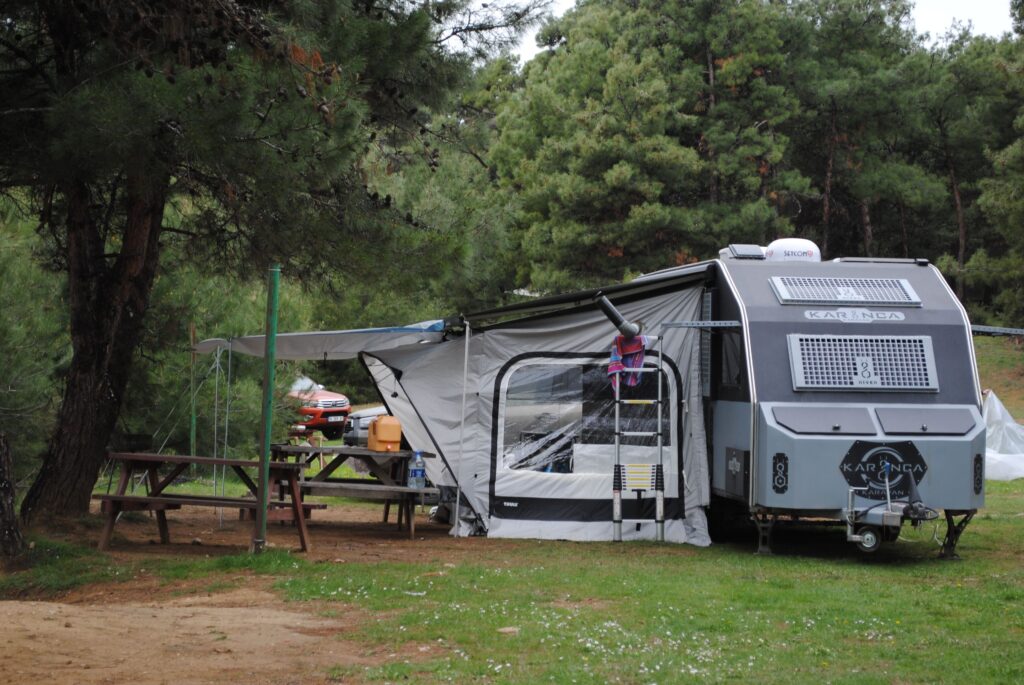
An RV site fee covers more than just a patch of ground, but it does not always cover as much as you might assume. What is included in your nightly rate depends heavily on the park, the site type, and sometimes even the time of year. Knowing what to expect before you arrive saves you from surprises at checkout.
The Standard Nightly Fee: What It Usually Covers
At most RV parks, the nightly site fee includes your pad, a sewer connection, a water hookup, and an electrical hookup. These three utilities (water, sewer, and electric) are collectively called full hookups, and they are what most RVers expect when they book a standard site. Beyond that, what else is bundled into the rate varies quite a bit from one property to the next.
Some parks include WiFi, trash pickup, and access to common amenities like restrooms and a dump station in the base rate. Others keep the nightly number low and charge separately for each of those things. The safest assumption when booking is that you are paying for the pad and hookups unless the listing specifically states otherwise.
Utilities: When They’re Included and When They’re Metered
Electricity is the utility most likely to be handled differently depending on the park. Many parks include electricity in the nightly rate up to a usage threshold, after which you pay for what you use. Others meter electricity from the start, reading your pedestal at check-in and check-out, and charging you for the kilowatt-hours consumed during your stay.
Metered electric is more common at parks that cater to long-term stays, where the difference in consumption between a solo traveler and a family running air conditioning around the clock becomes significant over weeks or months. Water and sewer are almost always included in full-hookup sites without metering, but it is worth confirming if you plan to stay somewhere for an extended stretch. When in doubt, ask the park how utilities are handled before you finalize your reservation.
Common Extra Fees and Why Parks Charge Them
Extra fees at RV parks generally fall into a few consistent categories: amenity access, guest passes, and convenience services. A park with a pool, fitness center, or clubhouse may charge an amenity fee on top of the nightly rate to offset the cost of maintaining those facilities. This is not a hidden charge so much as a cost of access to extras that not every guest uses equally.
Convenience services like laundry, propane refills, and firewood are rarely included in the site fee and are sold separately at the park. This is standard practice across the industry and is rarely a sign of a park trying to nickel-and-dime guests. These are optional expenses that depend entirely on how you travel and what you need during your stay.
Resort Fees, Amenity Fees, and What to Expect
Resort fees have become more common at larger RV parks and campground chains, particularly those with significant on-site amenities. These fees are charged per night on top of the base site rate and cover amenities such as pool access, playground upkeep, and general facility maintenance. They typically range from a few dollars to about $10–$15 per night, depending on the property and its offerings.
The important thing to know about resort and amenity fees is that they should be disclosed before you book, not revealed at check-in. Reputable parks include these in their rate breakdowns or quote them upfront when you call. If a fee appears on your bill that was not mentioned during booking, that is worth a conversation with the front desk.
Pet Fees, Guest Fees, and Other Policy-Driven Charges
Many parks charge a nightly or one-time pet fee for guests traveling with dogs or other animals. This fee covers the additional wear on the grounds and the cost of maintaining pet areas like dog runs or waste stations. The amount varies widely, but a fee of five to twenty-five dollars per pet is a reasonable range to plan for if your park does not specify a fee.
Guest fees apply when someone not registered on your reservation visits your site during the day or spends the night. Parks charge these fees because additional people use shared amenities, restrooms, and parking, all of which have real operating costs. If you are expecting visitors during your stay, checking the park’s guest policy ahead of time is a simple way to avoid an unexpected charge.
How to Confirm Pricing Before You Book
The most reliable way to understand exactly what you are paying for is to read the full rate breakdown on the park’s website and then call with any remaining questions. Most parks are happy to walk you through what is included, what is metered, and what fees apply to your specific situation. Getting clarity before you arrive takes a few minutes and is always worth the effort.
When you call, ask three specific questions: whether electricity is included or metered, whether there are any nightly fees beyond the listed site rate, and whether the park has a pet or guest policy. Those three answers will cover the majority of the charges that tend to catch guests off guard. A park that answers those questions clearly and up front is usually one worth staying at.
Book with Town & Country RV Park Today!
Town & Country RV Park sits in Bridge City, Texas — less than 3 miles from the Orange County Advanced Power Station and within a 20-minute drive of every major refinery and LNG facility in the Golden Triangle. Our sites come with all utilities included and free WiFi, so you can park, plug in, and get to work. Book with us today!
Frequently Asked Questions
Is WiFi always included in the site fee?
Not always. Some parks include WiFi in the nightly rate, while others charge separately or offer it as a premium upgrade. Check the listing or call ahead to confirm before you assume it is covered.
Why do some parks charge for electricity separately?
Parks that cater to longer stays often meter electricity because consumption varies significantly between guests. Metering makes the pricing fairer and reflects actual usage rather than building a high estimate into everyone’s base rate.
Are pet fees standard?
Pet fees are common but not universal. Many parks charge them to cover the upkeep of pet-friendly areas and any additional cleaning. Always check a park’s pet policy when you book, especially if you are traveling with multiple animals.
How do I avoid surprise charges?
Read the full rate breakdown before booking, and call the park with any questions about fees that are not clearly explained. Asking about electricity, resort fees, and guest policies upfront covers most of what tends to show up unexpectedly at checkout.